



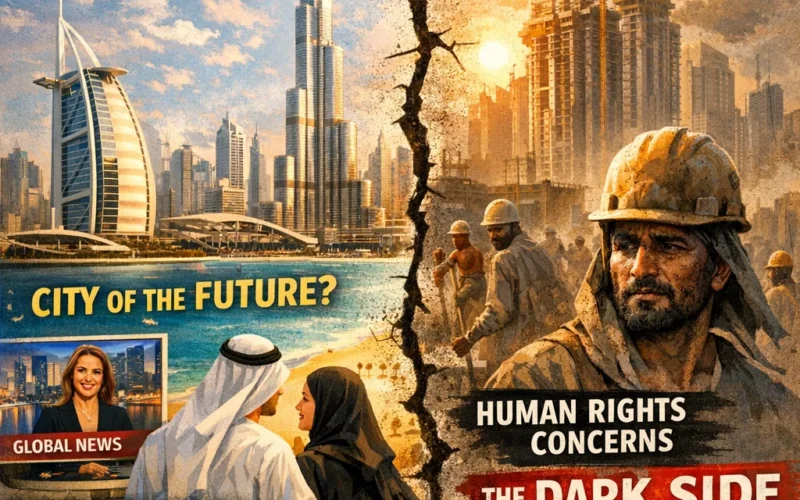
An Analysis of British Press Coverage and How the Image of Dubai Changed (2005–2025)
Over the past two decades, Dubai has become one of the most frequently discussed cities in international media. With its rapid economic growth and transformation into a global hub for tourism, finance, and trade, Dubai has consistently appeared in Western newspapers—particularly in the United Kingdom.
Table Of Content
- An Analysis of British Press Coverage and How the Image of Dubai Changed (2005–2025)
- 1. A Large British Expatriate Community
- 2. Economic and Investment Links
- 3. Migration and Tax Debates
- Media Analysis
- Phase One: The City of Ambition (2005–2008)
- Phase Two: Post-Crisis Skepticism (2009–2015)
- Phase Three: The Emergence of a Global Hub (2016–2025)
However, the tone of this coverage is far from uniform. While some Western outlets portray Dubai as a symbol of economic success and urban ambition, others publish critical reports about legal systems, labor issues, or the sustainability of its rapid growth.
Understanding this mixed narrative requires examining how British media cover Dubai and the political and economic context behind that coverage.
Why the British Press Pays Close Attention to Dubai
Several factors explain why Dubai receives extensive attention in British media.
1. A Large British Expatriate Community
The United Arab Emirates has become a major destination for British professionals seeking career opportunities or a different lifestyle. Tens of thousands of British citizens live in Dubai, making news about the city directly relevant to British audiences.
As a result, newspapers such as Financial Times and The Guardian frequently report on economic, social, and legal developments in the city.
2. Economic and Investment Links
British companies maintain strong economic ties with the UAE in sectors such as finance, energy, consulting, and real estate.
Dubai also serves as a regional headquarters for many multinational companies operating across the Middle East and Africa.
Because of this role, developments in Dubai’s economy often appear in business and financial reporting within the British press.
3. Migration and Tax Debates
In recent years, rising taxes in Britain have encouraged a growing number of entrepreneurs, investors, and public figures to relocate to Dubai.
This trend has sparked debates in British media about wealth migration and tax policies, often placing Dubai at the center of discussions about global mobility for high-net-worth individuals.
Security and Geopolitical Coverage
Another theme in Western reporting is the geopolitical context of the Middle East.
News about regional tensions is often discussed in relation to major economic centers like Dubai. Western newspapers sometimes highlight how international companies operating in the city monitor geopolitical risks and maintain contingency plans during periods of regional instability.
Media Analysis
This type of coverage tends to frame Dubai as a prosperous and dynamic city that nevertheless exists within a complex geopolitical environment.
Legal Systems and Cultural Differences
Legal cases involving tourists or expatriates often receive significant coverage in the British press.
One reason is the difference between legal traditions in Britain and those in the UAE.
In the United Kingdom, freedom of expression is a central pillar of political and media culture.
Meanwhile, the United Arab Emirates enforces stricter regulations regarding online content, public security, and certain social behaviors.
When legal incidents involving foreign nationals occur, they frequently become headlines in British newspapers as examples of these contrasting legal systems.
Dubai as a Competing Financial Hub
Another important factor shaping media coverage is global economic competition among major cities.
For decades, London has been one of the world’s leading financial centers. However, in the past decade cities like Dubai, Singapore, and Hong Kong have increasingly attracted multinational firms and investors.
Dubai’s advantages include:
-
Low or zero personal income taxes
-
Business-friendly regulations
-
A strategic geographic location connecting Europe, Asia, and Africa
The relocation of some businesses and entrepreneurs to Dubai has prompted debate within British media about the future competitiveness of traditional Western financial hubs.
The Rise of the Creator Economy
A newer angle in international coverage concerns Dubai’s growing role in the digital content and creator economy.
Dubai has actively positioned itself as a global hub for influencers and digital creators through initiatives such as 1 Billion Followers Summit, a large conference that brings together online creators, media companies, and technology platforms.
This reflects a broader shift in how cities compete globally. Beyond finance and tourism, modern cities increasingly seek influence through digital media and the creative economy.
By attracting creators with global audiences, cities like Dubai can amplify their international visibility and soft power.
Debate Over Dubai’s Development Model
Dubai’s rapid rise has also sparked intellectual and political debates in Western media.
Some analysts view Dubai as a pioneering example of a modern global city built around:
-
Tourism
-
International finance
-
Trade and logistics
-
Technology and innovation
Others question the sustainability of this model, pointing to issues such as:
-
Heavy reliance on expatriate labor
-
Rapid real estate development
-
Social and economic disparities among workers
These debates are part of a broader Western discussion about new urban development models emerging outside Europe and North America.
How Dubai’s Image in Western Media Changed (2005–2025)
Over the past twenty years, Dubai’s image in Western media has gone through several distinct phases.
Phase One: The City of Ambition (2005–2008)
During this period, Dubai was widely portrayed as a futuristic “city of dreams.”
Mega-projects such as:
-
Burj Khalifa
-
Palm Jumeirah
captured global attention. Western media often highlighted Dubai’s bold architecture, luxury developments, and ambitious vision for growth.
Coverage during this era was largely positive, focusing on innovation and urban spectacle.
Phase Two: Post-Crisis Skepticism (2009–2015)
After the Global Financial Crisis, Western coverage became more cautious.
Some reports questioned the sustainability of Dubai’s economic model, raising concerns about:
-
Real estate debt
-
Economic slowdown
-
Overreliance on construction and tourism
Nevertheless, Dubai gradually recovered from the crisis and resumed economic growth in the following years.
Phase Three: The Emergence of a Global Hub (2016–2025)
In the past decade, the narrative shifted once again.
Dubai began to be portrayed not only as a luxury tourism destination but also as a global center for:
-
startups and entrepreneurship
-
international trade
-
digital media and innovation
Major events such as Expo 2020 reinforced the city’s image as a global meeting point for business, culture, and technology.
At the same time, Western media continued publishing investigative or critical reports on legal systems and labor issues, making the overall portrayal more complex and nuanced.
Conclusion
Western coverage of Dubai reflects a mix of admiration and scrutiny.
On one hand, Dubai is widely recognized as a city that successfully transformed itself into a major global hub for tourism, finance, and trade. On the other hand, its rapid development and distinct legal framework continue to spark debate in Western media.
What is clear, however, is that Dubai has firmly established itself as a key player in the global network of cities—and its presence in international media is likely to remain significant in the years ahe







No Comment! Be the first one.