



The Smart Headband in Chinese Schools: Digitizing Attention
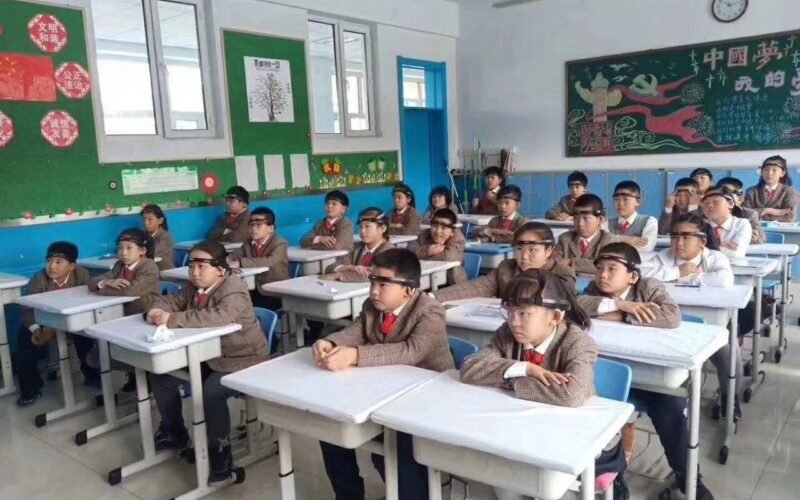
China has become a massive global laboratory for Artificial Intelligence applications. Among the most controversial is the “Smart Headband” that has surfaced in various Chinese classrooms.
Table Of Content
1. What is the System?
The device is commercially known as Focus 1, manufactured by BrainCo, a startup with roots in Harvard University labs that maintains its primary operations in China.
The integrated educational ecosystem incorporating these devices is often categorized under China’s “Smart Education” initiatives, backed by the government to enhance student efficiency in STEM subjects (Science, Technology, Engineering, and Mathematics).
2. The Core Technology: How Does the Headband Work?
The headband relies on a technology called Electroencephalography (EEG). Here is how it operates:
-
Sensors: The headband contains three sensors (electrodes) that make contact with the forehead and behind the ears.
-
Signal Reading: These sensors pick up weak electrical signals emitted by neurons in the brain during thinking or focusing.
-
Data Analysis: These signals are transmitted wirelessly to the teacher’s computer, where AI algorithms analyze brainwave patterns (such as Alpha and Beta waves).
-
Real-time Biofeedback: An LED light on the front of the device changes color based on the student’s state:
-
Red: Indicates very high concentration.
-
Blue: Indicates a relaxed state or a wandering mind.
-
White: Indicates loss of connection or inactivity.
-
3. The Data Journey: From Student to Teacher
Once students put on the headbands and the lesson begins, the classroom transforms into a live “data dashboard.”
-
For the Teacher: A graph appears for each student showing their attention levels for every minute of the lesson. If a teacher notices the “blue” color dominating the class, it signals that the explanation might be boring or unclear, prompting an immediate change in teaching style.
-
For Parents and Admin: Periodic reports (daily or weekly) are sent to parents via apps like WeChat. These reports include a “concentration score” ranking the child against their peers, creating significant social and competitive pressure.
4. Stated Goals vs. Experimental Reality
BrainCo and the adopting schools (such as Jinhua Primary School) claim the goals are:
-
Improving Academic Results: By encouraging students to remain committed to focusing.
-
Assisting Teachers: Identifying students with hidden learning difficulties.
-
Brain Training: Using “mental control” exercises to increase attention span.
However, this experiment has sparked a wave of global and local criticism, with some describing it as a “technological nightmare” that turns children into 24/7 monitored robots.
5. Ethical and Psychological Concerns
Experts have raised several fundamental concerns regarding this system:
-
Brain Privacy: Does anyone have the right to hack the “final fortress” of privacy—internal thought?
-
Scientific Accuracy: Some neuroscientists argue that EEG signals from simple wearable devices may not be accurate enough.
6. The Future of Technology in Schools
Despite a temporary retreat in the use of these headbands in some schools following media backlash, the trend toward “Digital Schools” in China continues. Important Note: In 2019, following the viral spread of videos showing students wearing these headbands, educational authorities in some Chinese provinces issued directives to be cautious with such technologies to ensure the protection of student data and privacy.
Conclusion
. It primarily utilizes Electroencephalography (EEG) technology, which employs sensitive forehead sensors to capture and analyze neural brainwave patterns emitted during learning activities.
In terms of operation, the device transmits real-time data from the student’s head to a teacher’s dashboard. A built-in LED indicator on the headband changes color to reflect the student’s mental state: Red signifies deep focus, Blue indicates distraction or relaxation, and White shows a loss of connectivity.
The primary goal of this innovation is to boost academic performance and digitize the tracking of student engagement. However, the system has faced significant backlash regarding the invasion of brain privacy, the creation of intense psychological pressure on children, and scientific skepticism regarding the accuracy of its data compared to clinical-grade medical equipment.





No Comment! Be the first one.