


The Sweet Danger: Understanding the Risks of Infant Botulism and “Mad Honey”
Honey has long been treasured as one of nature’s most remarkable gifts. Known for its natural sweetness, healing properties, and nutritional benefits, it has earned a place in kitchens and medicine cabinets around the world. From soothing sore throats to serving as a healthier alternative to refined sugar, honey is often seen as a symbol of purity and wellness.
Table Of Content
- The Sweet Danger: Understanding the Risks of Infant Botulism and “Mad Honey”
- 1. Infant Botulism: Why Babies Must Avoid Honey
- The Science Behind the Risk
- Symptoms and Severity
- A Universal Medical Warning
- Prevention Is Simple
- 2. “Mad Honey”: A Rare but Powerful Natural Toxin
- How Mad Honey Is Made
- Why It’s Called “Mad Honey”
- Effects on the Body
- Low Doses
- Higher Doses
- Treatment and Recovery
- Honey: Safe, But Not Without Limits
- When Honey Is Safe
- When Caution Is Needed
- Final Thoughts
However, beneath its golden glow lies a lesser-known truth: honey is not universally safe. Under certain conditions, it can pose serious health risks—especially for vulnerable individuals like infants, or when sourced from specific environments. Two of the most notable dangers associated with honey are infant botulism and the rare phenomenon known as “mad honey.”
This article explores these hidden risks, helping you understand when honey is beneficial—and when it can become dangerous.
1. Infant Botulism: Why Babies Must Avoid Honey
One of the most important health warnings regarding honey involves infants under the age of one. While honey is perfectly safe for adults and older children, it can be extremely dangerous—even life-threatening—for babies.
The Science Behind the Risk
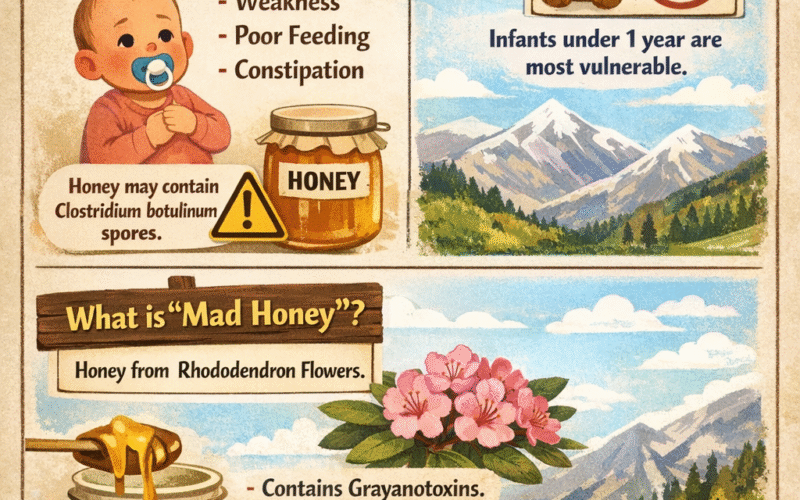
Honey can naturally contain spores of a bacterium called Clostridium botulinum. These spores are commonly found in soil and dust and can make their way into honey during production.
For most people, this isn’t a problem:
- Adults and older children have fully developed digestive systems that prevent these spores from growing.
- Their gut environment is mature enough to stop the bacteria from producing toxins.
However, the situation is very different for infants:
- Babies under 12 months have immature digestive systems.
- This allows the spores to grow and produce botulinum toxin inside the intestines.
This toxin is one of the most powerful known neurotoxins and can interfere with the normal function of nerves.
Symptoms and Severity
Infant botulism develops when the toxin spreads through a baby’s body, affecting muscle control. Symptoms may appear gradually and can include:
- Weakness and reduced muscle tone (“floppy baby syndrome”)
- Poor feeding or difficulty sucking
- Constipation
- Weak cry
- Difficulty breathing
In severe cases, the condition can lead to paralysis and respiratory failure, which may be fatal without prompt medical treatment.
A Universal Medical Warning
Health organizations around the world—including pediatric associations and public health authorities—agree on one clear guideline:
Never give honey to infants under 12 months of age.
This includes all forms of honey:
- Raw honey
- Processed honey
- Honey used in cooking or baking
- Foods containing honey as an ingredient
Even a small amount can pose a risk.
Prevention Is Simple
The good news is that infant botulism is entirely preventable. By avoiding honey during a baby’s first year, parents can eliminate this risk completely.
2. “Mad Honey”: A Rare but Powerful Natural Toxin
While infant botulism is a widely recognized concern, there is another, far less common danger associated with honey—one that affects people of all ages.
Known as “mad honey,” this unusual substance is produced in specific regions of the world and has a long history of both medicinal use and accidental poisoning.
How Mad Honey Is Made
Mad honey is created when bees collect nectar from certain species of rhododendron flowers. These plants naturally produce chemicals called grayanotoxins as a defense mechanism against herbivores.
When bees concentrate this nectar into honey, the toxins remain active.
Regions where mad honey is commonly found include:
- Parts of Turkey (especially the Black Sea region)
- Mountainous areas of Nepal
- Certain regions of Asia and Europe where rhododendron species grow
Because of its unique properties, mad honey is often harvested intentionally and sold in small quantities.
Why It’s Called “Mad Honey”
The name comes from its unusual effects on the human body. When consumed, grayanotoxins interfere with the normal functioning of sodium channels in nerve cells, disrupting communication between nerves and muscles.
This can lead to a range of symptoms that affect both the nervous system and the cardiovascular system.
Effects on the Body
The impact of mad honey depends largely on the amount consumed.
Low Doses
In small quantities, some people seek out mad honey for its mild psychoactive effects, which may include:
- Dizziness
- Lightheadedness
- A sense of euphoria
- Altered perception or mild hallucinations
Higher Doses
When consumed in larger amounts, the effects can become dangerous:
- Severe drop in blood pressure (hypotension)
- Slow heart rate (bradycardia)
- Irregular heart rhythms
- Nausea and vomiting
- Confusion or loss of consciousness
In extreme cases, mad honey poisoning can lead to serious cardiac complications requiring emergency medical care.
Treatment and Recovery
Fortunately, most cases of mad honey poisoning are treatable. With proper medical attention, symptoms usually resolve within 24 hours.
Treatment may include:
- Monitoring heart function
- Administering intravenous fluids
- Medications to stabilize heart rate and blood pressure
However, the condition can be alarming and potentially life-threatening if not addressed quickly.
Honey: Safe, But Not Without Limits
Despite these risks, it’s important to emphasize that honey is safe for the vast majority of people when consumed appropriately.
When Honey Is Safe
- For adults and children over one year old, regular honey poses no risk of botulism
- Commercial honey products are generally safe when consumed in moderation
- The benefits of honey—antioxidants, antibacterial properties, and natural sweetness—remain well documented
When Caution Is Needed
- Infants under 12 months must never consume honey in any form
- Honey sourced from regions known for mad honey production should be approached carefully
- Unlabeled or unfamiliar honey products should be consumed in moderation
Final Thoughts
What is nourishing and beneficial in one context can become harmful in another.
- For infants, even a small amount of honey can carry the risk of a serious neurological illness.
- In rare cases, certain types of honey can act as a natural toxin with powerful effects on the body.
Understanding these risks doesn’t mean avoiding honey altogether—it simply means using it wisely.
By staying informed and following basic safety guidelines, you can continue to enjoy honey’s many benefits without exposing yourself or your loved ones to unnecessary danger.







No Comment! Be the first one.